Little Piney Creek
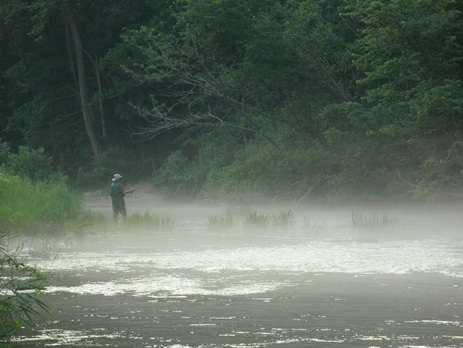
This is a wonderful little creek. The majority of the creek jumps up from a series of at least 5 springs, the most notable of which is Lane Spring, the centerpiece of the Lane Spring Recreation Area. Trout fishing continues for several miles downstream from the springs, although the lower parts of their range can pretty tough fishing during the dog days of summer.
Lane Spring Recreation Area is a part of the Mark Twain National Forest and is managed by the US Forest Service. The Recreation Area is beautifully maintained with a playground, hiking trails, a couple of nice shelters, numerous stationary BBQ grills, and a number of campsites available. To get to the Lane Spring Recreation Area, take Highway 63 south from Rolla for about 10 miles, and turn right at the big brown forest service sign. It costs $2 to park -- be sure to pay it, or you will receive a ticket in the mail.
White Ribbon Area
No bait restrictions. Daily limit is 4 trout.
The White Ribbon area of this creek begins at Milldam Hollow and proceeds downstream to the CR 7360 bridge. Take Hwy T south from Newburg, turn left on County Rd. 7400, and follow that until you reach a "T". The natural flow of the road would carry you to the right, but if you turn off to the left instead, you'll get to the stocking area of the White Ribbon area. The road is a bit rough and pretty heavily overgrown -- meaning full-size pickups will find it a TIGHT squeeze. You'll find a small parking area about a 1/2-mile down the road right near the creek. The road continues on for another 100 yards or so before terminating at private property. This is the section that is stocked.
The fish naturally work their way upstream from this area, and you'll usually find very few trout downstream. Enter the creek and slowly work your way upstream. Streamers, rubber trout worms, in-line spinners and such work well in the deeper stretches. The riffles also hold good fish that can be taken on flies under surface or by drifting bait under a bobber. Remember, these are 100% stocked fish, so fly fishermen should seriously also consider using attractor patterns like glo-bugs, marabou streamers, foam grasshoppers, and the such. Resident fish will take more natural flies, as well.
In the heat of the summer, focus your attention toward smallmouth bass, because the trout fishing gets downright slow. You'll find them in the deepest holes, and you'll mainly catch them only by drifting your fly right to their nose. The Missouri Department of Conservation does not generally even stock during the hottest part of the summer, because the water temperature typically rises above 70 degrees in this part of the creek.
Blue Ribbon Area
Only flies and artificial lures are permitted, soft plastics specifically excluded. Daily limit is 1 trout at least 18 inches long
This portion of the creek has a ton of character. If you take Highway 63 south from Rolla, you'll cross the creek in less than 20 minutes. The Blue Ribbon area begins at the Phelps county line more than two miles south (upstream) of the bridge near the creek's headwaters, and there is good fishing to be found there (keep an eye open for private property signs). The best populations of wild trout are generally found near and downstream of the springs between Highway 63 and the Lane Spring Recreation Area.
There is easy access to the creek below the bridge. Of course, there is also easy access available at Lane Spring Recreation Area, if you don't mind competing with swimmers during the summer. There is also access further downstream at Vida Slab and Milldam Hollow, both of which can be popular with locals for bonfires, beer-drinking, fireworks and swimming, but the locals are generally good-hearted folks who are pleasant and easygoing.
The entire stretch of water from Lane Spring all the way the Milldam is productive, and you'll even find some whoppers hiding in deep holes and near rootwads. The main upstream migration generally begins in early winter, and they don't generally come back downstream until late spring or early summer, fish concentrations will vary depending on the season. The Vida Slab portion is private property. In the past, the owners have been very comfortable with fly fishermen wading upstream past their property, BUT I recently heard a report of the owners asking fishermen to leave. I'm not sure what has changed, but if they are now being more protective, you can bet it's because an idiot fisherman took too many liberties. When in doubt, ask permission. They're good folks.
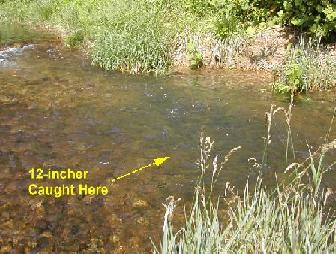
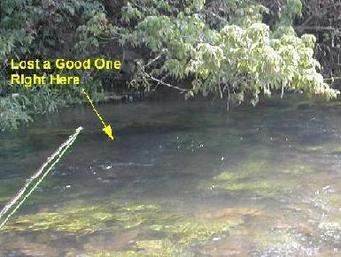
The summer offers the most challenging fishing, when the water is low and suitable habitat is at a minimum. If you can make a stealthy approach and delicate cast, and if you know how to read the water, you'll find the trout stacked up and feeding opportunistically in narrow feeding lanes. You'll probably only catch one fish per spot, however, and you'll generally only get a couple of casts before the fish are on to you. These pictures should give you a good idea of what you'll be up against.
Lane Spring Recreation Area is a part of the Mark Twain National Forest and is managed by the US Forest Service. The Recreation Area is beautifully maintained with a playground, hiking trails, a couple of nice shelters, numerous stationary BBQ grills, and a number of campsites available. To get to the Lane Spring Recreation Area, take Highway 63 south from Rolla for about 10 miles, and turn right at the big brown forest service sign. It costs $2 to park -- be sure to pay it, or you will receive a ticket in the mail.
White Ribbon Area
No bait restrictions. Daily limit is 4 trout.
The White Ribbon area of this creek begins at Milldam Hollow and proceeds downstream to the CR 7360 bridge. Take Hwy T south from Newburg, turn left on County Rd. 7400, and follow that until you reach a "T". The natural flow of the road would carry you to the right, but if you turn off to the left instead, you'll get to the stocking area of the White Ribbon area. The road is a bit rough and pretty heavily overgrown -- meaning full-size pickups will find it a TIGHT squeeze. You'll find a small parking area about a 1/2-mile down the road right near the creek. The road continues on for another 100 yards or so before terminating at private property. This is the section that is stocked.
The fish naturally work their way upstream from this area, and you'll usually find very few trout downstream. Enter the creek and slowly work your way upstream. Streamers, rubber trout worms, in-line spinners and such work well in the deeper stretches. The riffles also hold good fish that can be taken on flies under surface or by drifting bait under a bobber. Remember, these are 100% stocked fish, so fly fishermen should seriously also consider using attractor patterns like glo-bugs, marabou streamers, foam grasshoppers, and the such. Resident fish will take more natural flies, as well.
In the heat of the summer, focus your attention toward smallmouth bass, because the trout fishing gets downright slow. You'll find them in the deepest holes, and you'll mainly catch them only by drifting your fly right to their nose. The Missouri Department of Conservation does not generally even stock during the hottest part of the summer, because the water temperature typically rises above 70 degrees in this part of the creek.
Blue Ribbon Area
Only flies and artificial lures are permitted, soft plastics specifically excluded. Daily limit is 1 trout at least 18 inches long
This portion of the creek has a ton of character. If you take Highway 63 south from Rolla, you'll cross the creek in less than 20 minutes. The Blue Ribbon area begins at the Phelps county line more than two miles south (upstream) of the bridge near the creek's headwaters, and there is good fishing to be found there (keep an eye open for private property signs). The best populations of wild trout are generally found near and downstream of the springs between Highway 63 and the Lane Spring Recreation Area.
There is easy access to the creek below the bridge. Of course, there is also easy access available at Lane Spring Recreation Area, if you don't mind competing with swimmers during the summer. There is also access further downstream at Vida Slab and Milldam Hollow, both of which can be popular with locals for bonfires, beer-drinking, fireworks and swimming, but the locals are generally good-hearted folks who are pleasant and easygoing.
The entire stretch of water from Lane Spring all the way the Milldam is productive, and you'll even find some whoppers hiding in deep holes and near rootwads. The main upstream migration generally begins in early winter, and they don't generally come back downstream until late spring or early summer, fish concentrations will vary depending on the season. The Vida Slab portion is private property. In the past, the owners have been very comfortable with fly fishermen wading upstream past their property, BUT I recently heard a report of the owners asking fishermen to leave. I'm not sure what has changed, but if they are now being more protective, you can bet it's because an idiot fisherman took too many liberties. When in doubt, ask permission. They're good folks.
The summer offers the most challenging fishing, when the water is low and suitable habitat is at a minimum. If you can make a stealthy approach and delicate cast, and if you know how to read the water, you'll find the trout stacked up and feeding opportunistically in narrow feeding lanes. You'll probably only catch one fish per spot, however, and you'll generally only get a couple of casts before the fish are on to you. These pictures should give you a good idea of what you'll be up against.
|
|
While the summer can be challenging, Autumn and Spring can be downright exciting if you hit it right. A day or so after a good rain, when the water is just a bit off-color and just a bit high, you can really tear them up on nymphs fished deep. When the water is low and clear, dry flies can be just the ticket. IN GENERAL, if you want to match the primary food sources, stick with generic nymphs in sizes 14-18 and dries in sizes 12-16. These fish can also be stupid, though, falling for glo-bugs, woolly buggers, foam flies, etc. This creek has some decent hatches, and blue-winged olives, adams, tan midges, elk hair caddis all will get you into fish. Cracklebacks and renegades also work well on occasion. As the summer progresses, small grasshoppers and big ants cast along tall banks on breezy days can be dynamite. One interesting and unusual thing about this creek is the brown drake hatch, which typically happens in September (great big brown mayflies). While the hatch is not enormous and doesn’t put the fish on a surface feeding frenzy, it does get them all looking up.
This creek is really nothing terribly special, except that it is a textbook little Missouri spring creek that happens to have a terrific wild trout population. Occasionally I receive a emails asking about the interesting coloration in these fish and also the Mill Creek and Spring Creek populations. At the very least, the trout here are a hybrid of McCloud redbands and the Arlee strain trout stocked the Dept. of Conservation, but there are also reports that there may have been a private stock of another strain introduced previously -- perhaps Shasta or Gila strain, if old man rumors hold any credibility. Between the Hwy 63 bridge and Lane Spring, there are the ruins of an old hatchery operation. Maybe some truth to the tales? Regardless, these fish are stunning, so go catch one and see for yourself.
Lane Spring Recreation Area is a part of the Mark Twain National Forest and is managed by the US Forest Service. The Recreation Area is beautifully maintained with a playground, hiking trails, a couple of nice shelters, numerous stationary BBQ grills, and a number of campsites available. To get to the Lane Spring Recreation Area, take Highway 63 south from Rolla for about 10 miles, and turn right at the big brown forest service sign. It costs $2 to park -- be sure to pay it, or you will receive a ticket in the mail.
This creek is really nothing terribly special, except that it is a textbook little Missouri spring creek that happens to have a terrific wild trout population. Occasionally I receive a emails asking about the interesting coloration in these fish and also the Mill Creek and Spring Creek populations. At the very least, the trout here are a hybrid of McCloud redbands and the Arlee strain trout stocked the Dept. of Conservation, but there are also reports that there may have been a private stock of another strain introduced previously -- perhaps Shasta or Gila strain, if old man rumors hold any credibility. Between the Hwy 63 bridge and Lane Spring, there are the ruins of an old hatchery operation. Maybe some truth to the tales? Regardless, these fish are stunning, so go catch one and see for yourself.
Lane Spring Recreation Area is a part of the Mark Twain National Forest and is managed by the US Forest Service. The Recreation Area is beautifully maintained with a playground, hiking trails, a couple of nice shelters, numerous stationary BBQ grills, and a number of campsites available. To get to the Lane Spring Recreation Area, take Highway 63 south from Rolla for about 10 miles, and turn right at the big brown forest service sign. It costs $2 to park -- be sure to pay it, or you will receive a ticket in the mail.

| little_piney_spring_and_mill_creeks_map.pdf |
|
|
|